
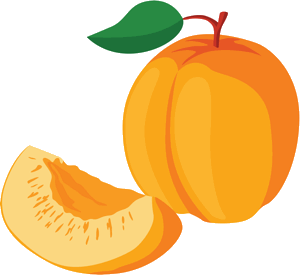
Definition: apricot
 An apricot is a soft round fruit with fuzzy, pale orange skin. It is also the
name of the tree that bears this fruit.
Fun Facts
1. The word "apricot" stems from a Latin phrase meaning "early-ripening." The name originates from the Latin praecoquum (meaning "precocious" or "early-ripe"). Ancient Romans named the fruit because apricot trees bloom and bear fruit earlier in the spring season than peaches and plums!
2. Apricots belong to the Rosaceae family alongside roses and almonds. Botanically classified as Prunus armeniaca, apricots are stone fruits (drupes) in the Rosaceae family. They share a direct genus with cherries, peaches, and almonds—which is why the inner kernel inside an apricot pit closely resembles a small almond!
3. Vibrant orange apricot flesh is loaded with vision-boosting beta-carotene. The deep orange color of an apricot comes from high concentrations of beta-carotene, an organic pigment and antioxidant. When ingested, the human liver converts beta-carotene into Vitamin A, which helps synthesize retinal pigments required for low-light vision!
4. Cross-breeding an apricot with a plum creates hybrid fruits like apriums and pluots. Plant geneticists can cross-pollinate apricot and plum trees (Prunus domestica) to form fruit hybrids! A pluot is majority plum with apricot ancestry, while an aprium is an interspecific hybrid that is genetically three-quarters apricot and one-quarter plum!
5. Drying apricots concentrates their natural sugars and changes their color. Fresh apricots are roughly 86% water. When dehydrated, water evaporates through transpiration, concentrating natural fructose sugars and dietary fiber. Commercial dried apricots are treated with sulfur dioxide (SO2) gas to prevent enzymatic browning and maintain their bright orange hue!
6. Apricot trees require hundreds of winter "chill hours" to break spring dormancy. To trigger flowering, an apricot tree must experience a specific duration of cold winter temperatures between 32∘F and 45∘F (0∘C–7∘C). This biochemical counter—known as chilling hours—prevents the tree from blooming during brief, deceptive winter warm spells!
7. Armenia considers the apricot a national cultural emblem. Although wild apricots likely originated in Central Asia or China, Armenia has cultivated them for thousands of years. The country's national woodwind instrument, the duduk, is carved exclusively from aged apricot wood due to its unique acoustic resonance!