
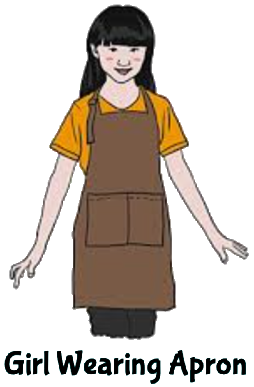
Definition: apron,
 a protective garment worn over the front of one's clothes and tied at the back.
Fun Facts
1. The word "apron" exists because of an ancient linguistic mistake called misdivision. The word originates from the Old French term napron (meaning "a small tablecloth"). In Middle English, people frequently misheard the phrase "a napron" as "an apron", permanently dropping the letter N over centuries of spoken language!
2. Full-body bib aprons are called "bib aprons" because of their protective upper chest panel. Unlike waist aprons that only cover the legs, a bib apron features a neck loop that holds a fabric shield over the torso. The word bib stems from the Old English bibben (meaning "to drink"), referring to cloth used to catch spills!
3. Heavy leather blacksmith aprons act as thermal radiation shields. Blacksmiths and welders wear thick split-cowhide leather aprons. Leather contains packed collagen fibers that resist hot embers, block flying sparks, and insulate the body against intense radiant heat emitted by forging furnaces!
4. A cobbler's apron featured specialized front pockets for nails and hammers. In traditional shoemaking, cobblers wore full-coverage aprons featuring reinforced canvas compartments. These heavy-duty pockets allowed tradespeople to safely store sharp awls, tack nails, and small iron hammers while working at cobbling benches!
5. Lead aprons protect patients during X-rays by blocking ionizing radiation. When you get a dental X-ray, technicians place a heavy gray apron over your body. These aprons contain a dense core layer of elemental lead (Pb), which absorbs high-energy X-ray photons and prevents harmful ionizing radiation from reaching internal tissue!
6. The "pinafore" apron was pinned directly to the front of young girls' dresses. In the 19th century, children wore washable protective garments called pinafores. The name combines pin and afore (meaning "pinned in front") because the fabric panels lacked buttons and were literally pinned directly onto dresses to keep daily dirt off!
7. Modern kitchen aprons use hydrophobic coatings to repel hot liquid spills. High-performance culinary aprons are treated with fluoropolymer or silicon-based hydrophobic coatings. These surface treatments increase liquid surface tension, causing hot oils and water-based sauces to bead up and roll off without soaking through to skin!