
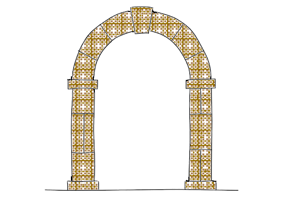
Definition: arch
 An arch is a curved structure made out of stone or brick and used to span an open space such
as a door, street, river.
Fun Facts
1. The word "arch" comes from an ancient Latin word for a shooting bow. The word originates from the Old French arche, which stems from the Latin arcus (meaning "a bow, curve, or arc"). It is the exact same root word used for archery weapons and colorful weather rainbows!
2. Arches stand up by converting downward gravity into outward compression. Stone is extremely strong under compression (being squeezed) but weak under tension (being pulled apart). An arch reshapes the downward load of gravity, directing forces along a curved line down into vertical support piers!
3. The central wedge stone holding an arch together is called a keystone. Wedge-shaped stones called voussoirs form the curve of a masonry arch. The topmost center stone—the keystone—locks every other block into place by wedging them tight so the structure cannot collapse inward!
4. Ancient Romans invented concrete to build revolutionary semi-circular arches. While earlier cultures used small arches, the Romans mastered them by inventing pozzolana concrete (a mix of volcanic ash and lime). This allowed them to construct massive, durable structures like the Colosseum and monumental aqueducts!
5. Gothic pointed arches allow buildings to rise much taller than round ones. Medieval architects introduced the pointed arch (ogival arch) during the Gothic era. Pointed arches channel weight more steeply toward the ground, reducing outward lateral thrust and allowing cathedral walls to be built taller with large glass windows!
6. Natural rock arches are carved by wind, frost, and chemical weathering. Geological arches like those in Arches National Park form in sandstone through differential erosion. Water seeps into rock joints, freezes, expands, and breaks away interior fragments, leaving a self-supporting stone span behind!
7. Human feet feature three natural anatomical arches that absorb impact. Your foot contains three structural arches formed by bones, ligaments, and tendons: the medial longitudinal, lateral longitudinal, and transverse arches. They act like springboards, distributing body weight and absorbing mechanical impact when you jump!