
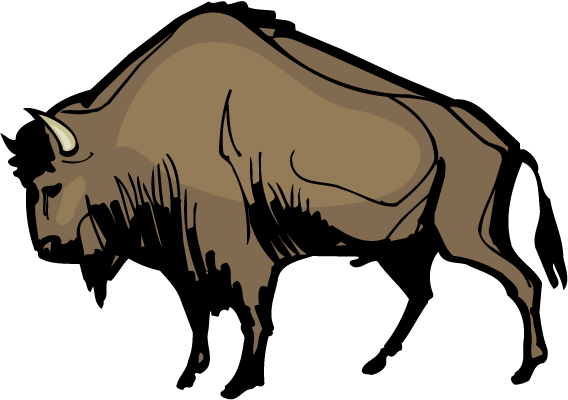
Definition: bison
 A bison a very large mammal with a large head, humped shoulders, and short curved horns.
Bison used to roam the plains of North America in large herds, but they were hunted until they were almost extinct.
North American bison are also called buffalo, but they are not related to the true buffalo of Africa and Asia. Bison have
hooves and are closely related to cattle. Bison eat only plants and chew their cud.
Fun Facts
1. Bison are the heaviest land mammals in North America! An adult male bison can weigh up to 2,000 pounds (900 kg)—that is as heavy as a small car! Even though they are gigantic, they can run up to 35 miles per hour (faster than a horse can gallop).
2. They have built-in snowplows on their backs. Bison have a huge hump of muscle and bone right over their shoulders. In winter, they use their massive heads like snowplows, swinging them side-to-side to push deep snow away so they can reach the grass underneath!
3. They are often called "buffalo," but it's not quite right. People in North America often call them buffalo, but true buffalo live far away in Africa and Asia. The proper scientific name for the American animal is bison, though both names are used every day.
4. Baby bison are nicknamed "red dogs." When baby bison are born in the spring, their fur isn't brown and shaggy yet—it's a bright, reddish-orange color! This helps them blend into prairie grass and keeps them easy for their moms to spot.
5. They love taking giant dust baths called "wallowing." To get rid of bugs, protect their skin from the hot sun, and shed old winter fur, bison roll around in the dirt and dust. These giant dirt spots are called wallows.
6. They are picky eaters with a favorite meal: grass! Bison are herbivores, which means they only eat plants. They spend up to 11 hours a day grazing on prairie grasses, weeds, and sedges.
7. They can jump super high. Even though they look slow and clumsy, bison are surprisingly athletic! They can leap over fences up to 5 feet (1.5 meters) high if they get startled or want to explore a new field.