
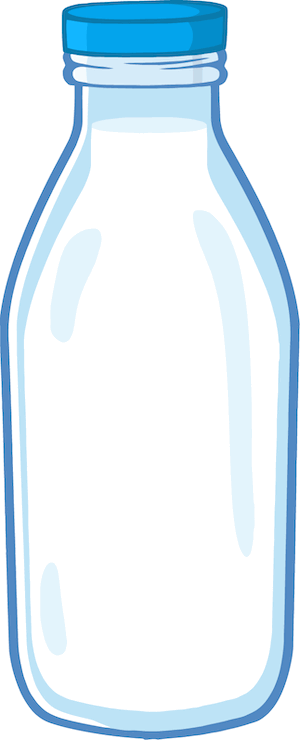
Definition: bottle
 A bottle is a container with a narrow neck and no handle used to hold or pour liquids. A bottle is
usually made of glass or plastic.
Fun Facts
1. The earliest glass bottles were created over 3,000 years ago. Ancient Mesopotamians and Egyptians made early glass bottles by coating a clay core with molten glass, letting it cool, and then scraping out the inner clay!
2. Ships inside bottles are built flat and popped open with strings. Artisans don't build miniature ships inside narrow glass bottles piece-by-piece. Instead, they build the model ship outside with hinged masts that fold completely flat, slide the ship through the bottle neck, and pull a secret thread to pop the sails upright!
3. Glass bottles can take over one million years to decompose. While plastic bottles take about 450 years to break down in a landfill, glass bottles made from natural sand never truly rot away—which is why recycling glass bottles is so important!
4. The oldest unopened bottle of liquid is over 1,600 years old. Discovered in a Roman tomb in Germany, the Rhenish Speyer wine bottle dates back to 325 AD and is still sealed shut with wax and a thick layer of olive oil instead of a cork.
5. A message in a bottle once floated in the ocean for 132 years. In 2018, a family on a Australian beach found a glass gin bottle tossed overboard from a German ship in 1886 as part of an ocean current experiment—making it the oldest known "message in a bottle" ever recovered!
6. Plastic bottles can be recycled into soft fleece jackets. Most plastic water bottles are made of PET plastic (polyethylene terephthalate). Recycling plants melt these bottles down and spin them into fine polyester threads used to make backpacks, carpets, and cozy fleece sweatshirts!
7. Thermos vacuum bottles use "nothing" to keep drinks hot or cold. Invented by Sir James Dewar in 1892, insulated vacuum bottles have two glass or metal walls with all the air pumped out between them. Because heat cannot travel through a vacuum (empty space), your hot chocolate stays hot and your ice water stays cold for hours!