
Definition: dog
 A dog is a domesticated mammal of the family Canidae and the order Carnivora. Its scientific name is
Canis lupus familiaris. Dogs are a subspecies of the gray wolf..
Fun Facts
1. Dogs were the first animals domesticated by humans from a now-extinct population of gray wolves about 20,000 to 40,000 years ago. Long before cats, dogs were already man's best friend.
2. It was modern humans (Homo sapiens), not Neanderthals who first domesticated dogs.
3. How did the domestication process start? At first humans did not actively capture or breed them. Instead, scientists think that some gray wolves, less afraid of and more tolerant of humans, started living near human settlements, perhaps eating some left-over food discarded by the humans. These more cooperative wolves survived and reproduced near human groups. The wolves produced pups that, when they grew up, proved to be more friendly to humans, and less agressive, or the opposite. Then the humans would kill or drive out the agressive wolf pups and leave the others alone. This process repeated itself over thousands of years in many places, leading to a growing group of gray wolves more tolerant of and less afraid of humans.
4. These early dogs were physically the same as gray wolves but behaved differently. They started providing benefits to humans by giving early warning of approaching danger (barking), sanitation (scavenging waste), and possibly assistance in hunting (flushing, cornering, retrieving). In return, they gained reliable food, shelter, and protection—especially during harsh glacial conditions (e.g., Last Glacial Maximum.) It was a "Win - Win" situation!
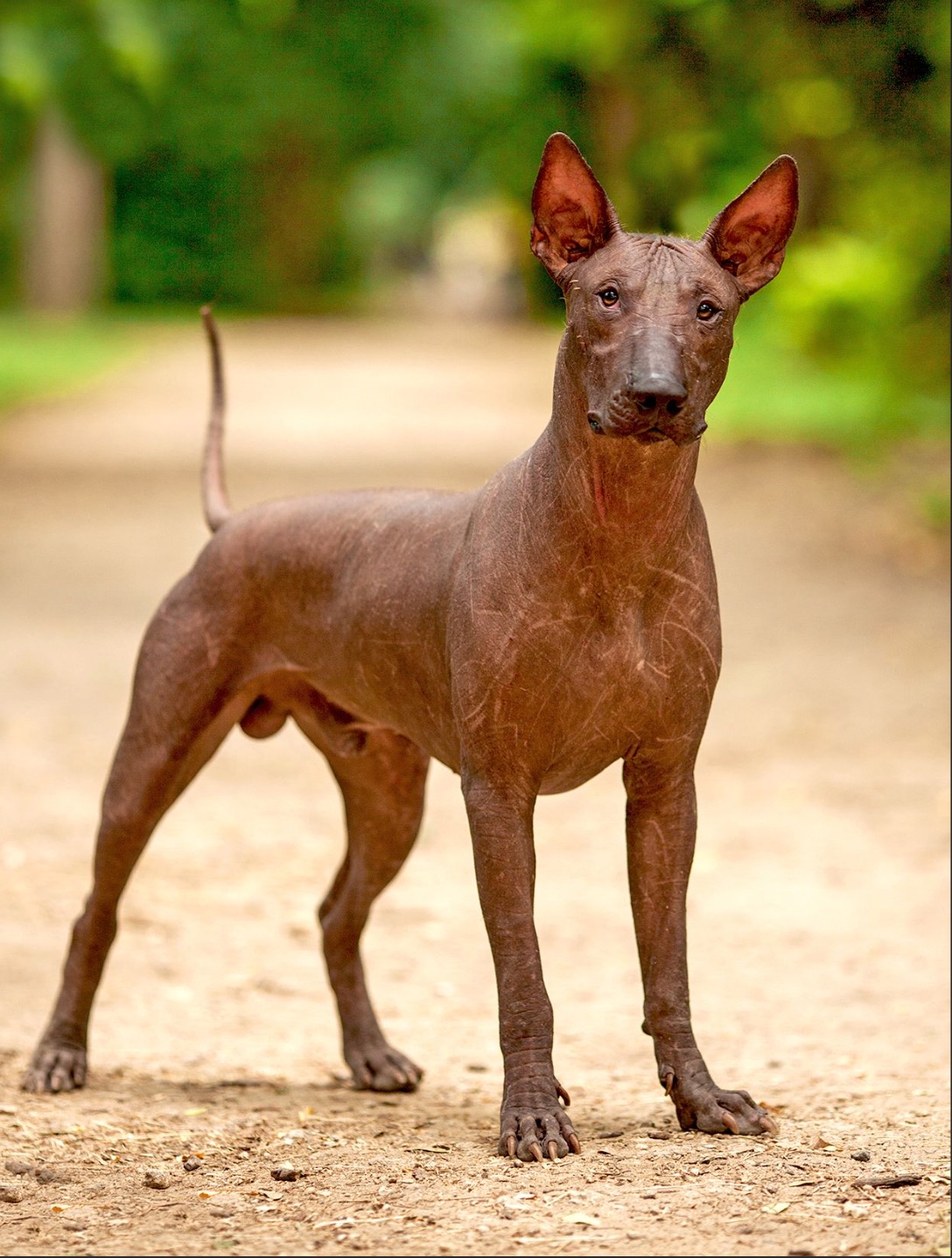
5. Humans have used dogs as food in various cultures and historical contexts, but dog consumption was not universal. At some prehistoric North American sites dog bones show butchering marks and were found in cooking pits alongside deer and other food remains. The Aztecs raised a hairless, mute dog xoloitzcuintli specifically for consumption.
6. About 15,000 years ago, as the climate warmed, humans began migrating to many parts of the Earth, and they took their dogs with them. As these wolves followed humans to different parts of the world—like colder mountains or warmer forests—their bodies started to change to fit their new homes. They became even more friendly to humans. Wolves that weren't afraid of humans got more food, so they survived longer. They became smaller in size, and less scary than wilder wolves. Their fur changed color or thickness depending on whether they were living in colder or warmer climates.
7. Then humans began to selectively breed the wolves, and in time they became the dogs we know and love today. Humans did this by deciding which wolves would be allowed to breed (have pups). If a hunter wanted quieter dogs to help him stalk prey in the forest, he allowed only adult animals with this characteristic to have pups. If humans wanted to have dogs that would bark loudly when a stranger approached the village they selected for that characteristic. Likewise humans could breed for varaitions in color and thickness of fur, speed in running, ability to herd other animals, and more. Dog breeders learned to breed dogs for just about any combination of characteristics they wanted. Today there are about 190 to 360 officially recognized dog breeds in the world, depending on which "dog club" you ask! Some of the more popular ones are dachshunds, poodles, German shepherds, golden retrievers, and French bulldogs.