
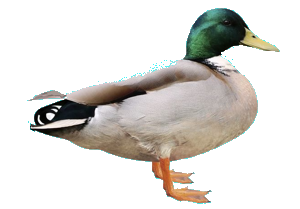
Definition: duck
 A duck is a small, feathered, water-loving bird with a flat beak, short legs, and webbed feet designed
for swimming.
Fun Facts
1. Ducks have built-in waterproof coats. Ducks produce a special oil from a gland near the base of their tail called the uropygial gland (or preen gland). As they rub their beaks against this gland, they spread the natural oil over all their outer feathers, creating a tight seal that prevents water from ever soaking through to their skin!
2. A duck’s feet can't freeze in icy water. Ducks have a unique circulatory system in their legs called a counter-current heat exchanger. Warm blood flowing down from their heart warms up the cold blood returning from their webbed feet, allowing them to swim in ice-cold lakes without feeling pain or losing body heat.
3. Not all ducks actually quack. Female Mallards are famous for the loud "quack-quack" sound, but male ducks (called drakes) make soft, raspy squeaks or whistles. Other duck species whistle, yodel, coo, or stay completely silent!
4. Ducks have 360-degree vision. Because a duck's eyes are positioned on the sides of its head, it has a near-complete field of view. They can see what's happening in front, behind, and beside them all at the same time—making it almost impossible for predators to sneak up on them!
5. Baby ducklings imprint on the first moving thing they see. Within hours of hatching, baby ducklings bond with and follow whatever moving object they spot first—which is usually their mother! However, if a human or even a dog walks by first, the duckling will follow them around thinking they are its parent.
6. Ducks sleep with one eye open and half their brain awake. When ducks sleep in a row, the ducks on the outside edges keep one eye facing outward to watch for danger. Half of their brain stays alert for predators while the other half rests!
7. Duck bills have built-in comb filters. Many ducks have tiny, comb-like structures along the edges of their bills called lamellae. When they scoop up mouthfuls of muddy pond water, they squirt the water out through these tiny teeth-like ridges to trap tasty underwater plants, bugs, and seeds inside!