
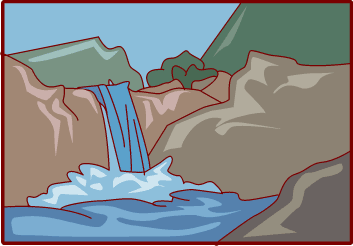
Definition: fjord
 A fjord is a long, narrow ocean inlet that passes between high and rocky banks or steep cliffs.
Fun Facts
1. They are giant water valleys carved by ice! A fjord (pronounced fyord) is a long, narrow strip of ocean water that reaches deep inland between steep cliffs or mountains.
2. Giant glaciers made them like huge bulldozers. Millions of years ago during the Ice Age, massive moving rivers of ice called glaciers slowly slid down mountains, carving out deep, U-shaped valleys in the rock.
3. They flooded when the ice melted. When the Ice Age ended and the giant glaciers melted, ocean water rushed in to fill up the deep valley floors, turning them into sea waterways!
4. Norway is the fjord capital of the world. While you can find fjords in places like Alaska, New Zealand, and Chile, Norway is most famous for them—it has more than 1,000 fjords lining its coast!
5. The word "fjord" comes from the Vikings. The word comes from an old Norse word meaning "where one crosses over." Ancient Vikings used fjords as natural water highways to sail their ships safely through high mountains.
6. They are insanely deep! Because heavy glaciers scooped out so much rock, fjords can be deeper than the ocean outside them. Norway's Sognefjord is over 4,000 feet (1,300 meters) deep—that's deep enough to submerge four Eiffel Towers stacked on top of each other!
7. Whales love to visit them. The calm, sheltered waters of fjords make perfect places for marine life. Orcas (killer whales), humpback whales, seals, and porpoises frequently swim into fjords to hunt for fish and rest.