
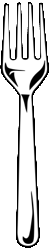
Definition: fork
 A fork is a common, handheld tool with a handle and 2–4 pointed, metal, or plastic prongs called "tines".
It is used for lifting, poking, and eating solid foods like pasta, fruits, or vegetables. It is a staple (something that is essential or
commonly used.) dining utensil.
Fun Facts
1. Ancient Greeks and Romans used large forks—but only for cooking. Long before anyone brought a fork to the dinner table, ancient chefs used big two-pronged metal forks to hold heavy meats over hot cooking fires or slice roasts in the kitchen!
2. Eating with a fork was once considered strange and luxurious. When an Byzantine princess brought gold table forks to Venice in 1004 AD, people were shocked! Eating with utensils instead of fingers was seen as overly fancy and unnecessary for centuries across Europe.
3. Forks used to have only two straight prongs. Early dining forks looked like mini pitchforks with two long, straight spikes (called tines). Food frequently slipped off or got stuck, so craftspeople added extra tines and curved the metal to hold food better!
4. The word "fork" comes from the Latin word for a farm pitchfork. The word origins trace back to the Latin word furca, which described a large two-pronged wooden pitchfork used by farmers to scoop up heavy hay bales in agricultural fields.
5. Forks changed how dinner knives were made. Before forks became popular, people used sharp personal knives to spear meat at the table. Once forks took over the job of holding food, table knives were made with blunt, rounded tips so diners wouldn't accidentally poke themselves!
6. Sailors avoided forks because they thought they weren't "manly." For hundreds of years, sailors in the British Navy refused to use forks on ships, believing that eating with anything other than a pocket knife and fingers was a sign of weakness!
7. Forks changed how dinner knives were made. Before forks became popular, people used sharp personal knives to spear meat at the table. Once forks took over the job of holding food, table knives were made with blunt, rounded tips so diners wouldn't accidentally poke themselves!