
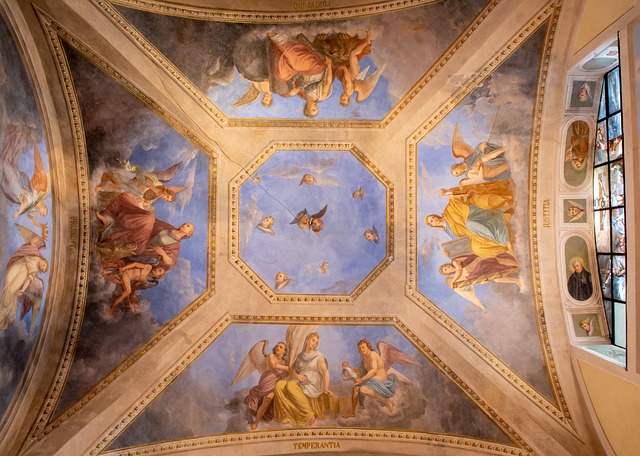
Definition:fresco, pl frescoes
 A fresco is the art of painting on wet plaster with colors dissolved in water or
limewater, or a picture produced by this method.
Fun Facts
1. They are paintings made right inside a wall! A fresco isn't painted on paper or canvas. Instead, artists paint directly onto wet plaster on a wall or ceiling, so the paint becomes a permanent part of the building itself.
2. The word "fresco" means "fresh" in Italian. It gets its name because the artist has to apply colorful paint while the wet wall plaster is still fresh!
3. Artists have to work super fast. Plaster dries quickly! Artists only have about 8 to 12 hours to finish painting a section before the wall dries. If it dries out before they finish, they have to scrape it off and start over.
4. They can last for thousands of years. Because the paint chemical binds with the wet plaster, frescoes don't peel off easily. Ancient frescoes painted in places like Pompeii and ancient Egypt are still bright and colorful today!
5. Painters used ground-up rocks and insects for colors. Long ago, artists made fresco paint by mixing water with crushed rocks, minerals, mud, and even crushed bugs to get bright reds, blues, and yellow earths.
6. The wall "traps" the paint like a magic trick. When the wet plaster dries, a chemical reaction happens that locks the paint colors inside the wall. No glue or varnish is needed!
7. You can see faint seam lines if you look closely. Because artists worked day-by-day in small sections, you can often spot tiny crack lines where yesterday's dried plaster section met the new wet plaster section!