
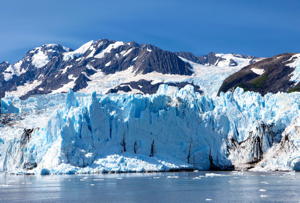
Definition: glacier
 A glacier is a large mass of ice formed in cold regions from compacted snow and very slowly
moving down a slope or across land.
Fun Facts
1. Rivers of Packed Snow: Glaciers aren't just frozen puddles; they are massive rivers of ice formed when layers of falling snow pile up year after year, squishing together under their own weight until they turn into solid ice!
2. Slow-Motion Creepers: Even though they look like solid mountains, glaciers are actually moving! They creep downhill very slowly—like a giant frozen river flowing down a mountain at a super-slow snail's pace.
3. Earth's Biggest Fresh Water Tanks: Glaciers are super important for our planet because they hold about 70% of all the fresh water on Earth, locked away in icy storage!
4. Nature's Heavy-Duty Bulldozers: As glaciers creep across the land, they act like giant frozen bulldozers, scraping away massive chunks of rock and carving out deep, U-shaped valleys, dramatic fjords, and sparkling lakes.
5. The Great Ice Calving Show: When a glacier slides all the way down to the ocean, massive chunks of ice break off and crash into the sea with a thunderous roar—an exciting process that scientists call calving!
6. Frozen Time Capsules: Scientists love to drill deep into glaciers to pull out long cylinders of ice called ice cores. These cores trap tiny air bubbles from hundreds or thousands of years ago, acting like a time machine to show what Earth's air used to be like!
7. Stunning Blue Ice: If you look deep inside a glacier, the ice often glows with a brilliant, magical blue color. This happens because the ice is packed so tightly that it absorbs every color of light except blue, which bounces back to your eyes!