
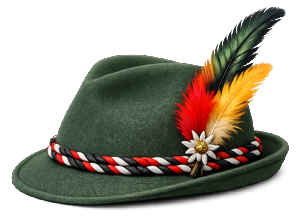
Definition: hat
 A hat is a shaped covering for the head worn for warmth, as a fashion item, or
as part of a uniform.
Fun Facts
1. President Abraham Lincoln used his tall top hat as a briefcase. Lincoln wore a tall stovepipe hat that added over seven inches to his height. More importantly, he used the extra space inside the crown to store important speeches, legal papers, and letters so he wouldn't lose them!
2. The world's oldest surviving hat is over 5,000 years old. When scientists discovered the frozen mummy of Ötzi the Iceman in the Alps, he was wearing a cozy winter cap made from bearskin, complete with a leather chin strap!
3. The phrase "mad as a hatter" comes from real 19th-century hat makers. Long ago, hat makers used liquid mercury to turn animal fur into smooth felt for top hats. Breathing in mercury fumes over time affected their nervous systems, making them act trembling, confused, and erratic!
4. A chef's tall white hat traditionally has 100 folds for 100 ways to cook an egg. The official name for a chef's hat is a toque blanche (French for "white hat"). In culinary tradition, the 100 pleats represented a master chef's ability to prepare an egg in one hundred different ways.
5. Panama hats are actually made in Ecuador, not Panama. Famous around the world for their lightweight, woven straw design, Panama hats originated in Ecuador. They got their misleading nickname because 19th-century gold miners bought them in Panama before traveling to California, and President Theodore Roosevelt was famously photographed wearing one while visiting the Panama Canal!
6. Baseball caps were invented to shade players' eyes from the sun. In 1860, the Brooklyn Excelsiors baseball team wore the ancestor of the modern baseball cap. It featured a long, stiff front visor specifically designed to shield a player's eyes from bright sunlight while catching fly balls.
7. The visor on a knight's helmet led to the modern military salute. When knights in armor passed one another or greeted royalty, they raised the front visor of their metal helmets with their right hand so their faces could be recognized. This protective gesture evolved into the modern hand salute!