
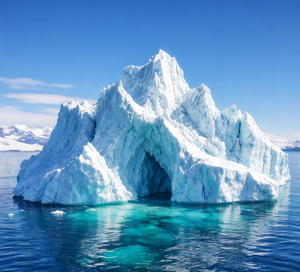
Definition: iceberg
 An iceberg is a piece of fresh water ice more than 15 meters (16 yards) long that has broken off
glacier or an ice shelf and is floating freely in open water.
Fun Facts
1. The word "iceberg" comes from two Dutch words - ijs ("ice") + berg ( "mountain"). Meaning in English, ice mountain.
2. Glaciers are "rivers" of ice that flow downhill and in time reach the sea. When the edge of the glacier extends over open water, it breaks off and floats away as an iceberg. Iceberg formation depends on a growing glacier, not a melting one.
3. Roughly 90% of an iceberg's volume is submerged underwater, leaving only about 10% visible above the surface. This is the origin of the phrase "just the tip of the iceberg."
4. The underwater portion of an iceberg is called the "bama", and it can extend out much further horizontally than the visible tip, making it easy for a vessel to strike the ice even if they seem to be keeping a safe distance from the visible peak.
5. The iceberg that sank the Titanic, estimates based on reports from the crew and the height of the ship's decks, was 200 to 400 feet long, 400 to 500 feet high from top to bottom., and weighed roughly 1.5 million tons.
6. Icebergs make noise. As they melt, they release air bubbles that have been trapped under high pressure for thousands of years. This creates a popping or crackling sound known as "iceberg sizzle" or "bergy seltzer."
7. Icebergs can be massive. The largest iceberg ever recorded was Iceberg B-15, which broke off the Ross Ice Shelf in Antarctica in 2000. It was about 183 miles long and 23 miles wide—larger than the entire island of Jamaica!