
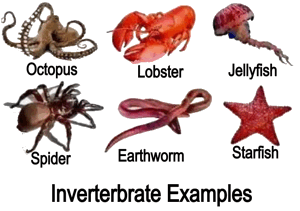
Definition: invertebrate
 An invertebrate is an animal that does not have a backbone or skeleton inside its body.
Fun Facts
1. Animals Without a Backbone: Invertebrates are creatures that do not have a backbone or a bony skeleton inside their bodies. Unlike humans, dogs, or birds, they hold their shape and support their muscles in completely different ways!
2. The Giant Majority Rule: Invertebrates make up the vast majority of all animal life on Earth! Out of every ten animal species on our planet, a whopping nine of them are invertebrates.
3. External Armor Skeletons: Many invertebrates—like beetles, crabs, and lobsters—wear their skeletons on the outside! This tough, crunchy protective suit is called an exoskeleton, and they have to shed it and grow a new one as they get bigger.
4. Incredible Jelly-Like Soft Bodies: Other invertebrates don't have hard shells at all. Soft-bodied water animals like jellyfish, octopuses, and earthworms rely on water pressure or flexible muscles to swim, crawl, and wiggle around.
5. The Mighty Insect Family: Insects make up the biggest group of invertebrates on Earth. This massive family includes ants, butterflies, bees, beetles, and dragonflies, boasting millions of different species!
6. Smart Ocean Cephalopods: Some invertebrates are surprisingly clever! Octopuses and squid belong to a group called cephalopods, and they have brilliant brains, can solve complex puzzles, and can even change the color and texture of their skin in a split second.
7. Vital Ecosystem Helpers: Invertebrates might be small, but they do huge jobs for our planet! Earthworms churn up and enrich garden soil, while bees and butterflies pollinate flowers so we can grow delicious fruits and vegetables.