
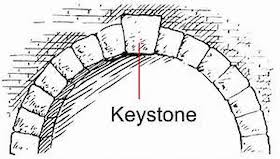
Definition: keystone
 A keystone is the central stone at the top of an arch.
Fun Facts
1. The Locking Stone: A keystone is the very last wedge-shaped stone placed right at the top center of an arch. It is the most important piece because it "locks" all the other stones in place.
2. Master of Gravity: Before arches and keystones were invented, buildings needed thick, heavy walls and pillars to hold up roofs. The keystone uses the power of gravity and shape to push weight outward and down, allowing builders to create wide-open spaces and doorways.
3. Ancient Engineering: The ancient Romans did not invent the arch, but they were absolute masters at using it. Thanks to keystones, they built massive bridges, aqueducts, and coliseums that are still standing thousands of years later!
4. No Glue Needed: Because of the clever wedge shape, the stones in an arch squeeze tightly against each other. Once the keystone is dropped into place, the arch holds itself up entirely through pressure—no cement or glue required during construction.
5. The Wooden Helper: When builders construct a stone arch, they can't just float the keystone in mid-air. They build a temporary wooden frame called a centering to hold the stones up until that final center stone slides in to lock everything together.
6. From Architecture to Ecology: The word "keystone" isn't just used in architecture. Scientists also talk about keystone species in nature—like sea otters or beavers—which are animals that hold an entire ecosystem together, just like an architectural stone holds up an arch!
7. Hidden in Plain Sight: If you look closely at older brick or stone buildings, churches, and castle gates around your town or city, you will likely spot a decorated keystone right above the windows and doors.