
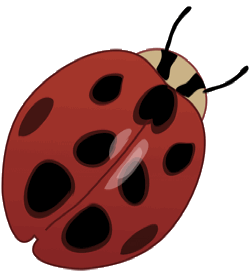
Definition: ladybug
 A ladybug is a a small, round beetle that is red or orange with black spots. Ladybugs eat aphids
and other insects that are harmful to plants.
Fun Facts
1. They are actually beetles, not bugs! Entomologists (bug scientists) call them ladybeetles or ladybirds. True bugs have needle-like mouthparts, but ladybugs have chewing mouthparts and hard wing covers, making them official members of the beetle family!
2. Their bright colors mean "Stay away!" Red, orange, and yellow are nature's warning signs. A ladybug's bright pattern tells birds and frogs, "Warning! I taste terrible and might make you sick!"
3. Their spots fade as they grow old. A ladybug's spots don't tell you its age! Instead, the number of spots depends on the species (some have 2 spots, some 7, and some over 20). However, as a ladybug gets older, its spots and shell color can naturally fade.
4. A single ladybug can eat 5,000 insects in its lifetime. Gardeners love ladybugs because they are natural bug-busters. They gobble up plant-destroying pests like aphids, scale insects, and spider mites all day long.
5. Baby ladybugs look like tiny, spiky alligators. Ladybugs go through a complete transformation called metamorphosis. Before turning into round, colorful beetles, ladybug larvae hatch as tiny, dark-colored creatures covered in spikes.
6. They smell with their feet and antennae. Ladybugs don't have noses! They use the sensory organs on their feet and antennae to touch, taste, and smell the world around them to hunt down tiny aphids.
7. They hibernate together in massive sleepovers. During chilly winters, thousands of ladybugs cluster together under tree bark, rocks, or inside house walls. Snuggling in a giant group helps them stay warm and survive until spring!