
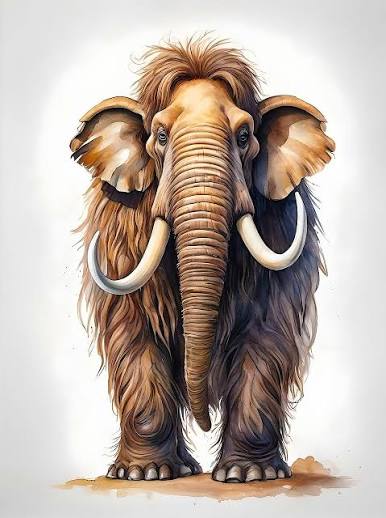
Definition: mastodon
 A mastodon is a very large extinct mammal. Several kinds of mastodons lived in
Africa, Europe, Asia, and North America tens of thousands of years ago. The last kind of mastodon became extinct
at the end of the last Ice Age. Mammoths and modern elephants may have developed from earlier mastodons.
Fun Facts
1. Ice Age Cousins: Mastodons were massive, furry relatives of modern elephants and woolly mammoths that roamed North and Central America during the Ice Age!
2. Not a Mammoth: Even though people often mix them up, mastodons and woolly mammoths were actually quite different! Mastodons were slightly shorter and stockier, and they had flatter heads.
3. Forest Munchers: While woolly mammoths loved grazing on wide-open grassy plains, mastodons preferred hanging out in forests and swamps, using their tusks to pull down tree branches, twigs, and leaves.
4. Cone-Shaped Teeth: Mastodons get their name from their unique teeth! The word "mastodon" comes from Greek words meaning "nipple-tooth" because their molars had bumpy, cone-shaped points designed for crushing hard leaves and twigs.
5. Curved Tusk Power: Like their mammoth cousins, mastodons had enormous, curved tusks. Some of these ivory tusks could grow up to 9 feet long and curved upward.
6. Heavy Coats: Because they lived during freezing Ice Age winters, mastodons wore thick, shaggy coats of coarse brown hair to keep themselves warm against the snow and ice.
7. Ice Age Neighbors: Mastodons lived alongside other incredible ancient animals like saber-toothed cats, giant ground sloths, and early humans before they vanished about 10,000 years ago.