
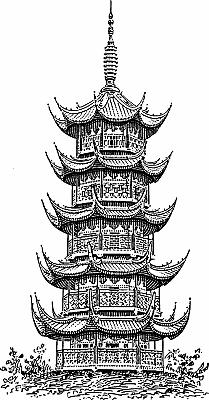
Definition: pagoda
 A pagoda is a tower in eastern Asia usually with roofs curving upward at the division of each of
several stories and erected as a temple or memorial.
Fun Facts
1. What is a Pagoda: A pagoda is a magnificent, multi-tiered tower with dramatically upturned eaves that is traditionally found in countries across Asia, especially China, Japan, and Korea: it is a striking architectural wonder.
2. Spreading with Buddhism: Pagodas were originally inspired by ancient Indian monuments called stupas, and they traveled along trade routes to East Asia where they were built to house sacred religious relics: they have a deeply spiritual history.
3. Always an Odd Number: If you count the roofs or tiers on a traditional pagoda, you will almost always find an odd number of floors—such as five, seven, or nine—because ancient builders believed odd numbers brought good luck and positive energy: they are built on lucky numbers.
4. Surviving Earthquakes: Even though some pagodas are hundreds of years old and tower high into the sky, many of them have managed to survive massive earthquakes because they have a flexible, pillar-like trunk running straight down the middle like a spine: they bend so they don't break.
5. Built for Climbing: Many pagodas have interior staircases that let visitors climb all the way to the top floors to enjoy breathtaking, panoramic views of the surrounding countryside and gardens: they are sky-high viewpoints.
6. Curved Roof Secrets: The signature curved, swooping roofs of pagodas weren't just designed to look pretty; the upturned corners were originally thought to scare away evil spirits and help let in more sunlight: they have a functional and magical design.
7. Global Inspiration: Pagoda designs became so popular around the world that European and American architects began building decorative garden pagodas in their own parks and estates centuries ago: they are a global design trend.