
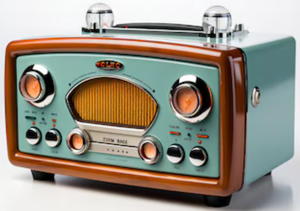
Definition: radio
 Radio is a way of sending signals made of waves that travel through the air. These radio
waves are picked up and translated into sounds by electronic devices called radios.
Fun Facts
1. Radios work using invisible light waves. Radio waves travel through the air at the speed of light—around 186,000 miles per second! Even though you can't see or feel them, they are a type of light signal carrying music and speech right to your speakers.
2. The Eiffel Tower was saved by radio. The famous tower in Paris was supposed to be torn down 20 years after it was built in 1889. It survived because scientists turned it into a giant radio antenna to send long-distance military messages.
3. Radio waves can travel around the Earth. Shortwave radio signals can bounce off a layer of charged particles in our atmosphere called the ionosphere, allowing a radio broadcast sent from one side of the planet to jump all the way to the other side.
4. Walkie-talkies are small radios. Those fun hand-held communicators you use with friends are actually two-way radios that send and receive signals over short distances on the exact same channel.
5. Wi-Fi, Bluetooth, and cell phones use radio waves. Every time you watch a tablet video, connect wireless headphones, or talk on a phone, you are using high-tech radio frequency signals to move data without wires.
6. Radios used to be as big as living room furniture. Before microchips were invented, radios used warm glass vacuum tubes to work, making them heavy wooden cabinets that stood on the floor like a bookshelf.
7. Sound effects used to be made live on air. Before TV, families gathered around the radio for "audio dramas." Actors had to slam fake miniature doors, blow whistles, and crunch gravel in buckets live in the studio to create sound effects.