
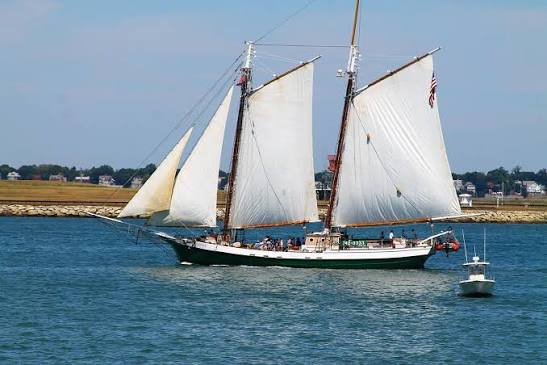
Definition: schooner
 A schooner is a sailing ship with at least two masts and having its
front mast shorter than its other masts.
Fun Facts
1. Sailing with Two or More Masts: A schooner is a specific type of sailing ship that is famous for having at least two masts (the tall wooden poles that hold the sails), with the back mast usually being taller than or the same height as the front mast.
2. Special Angled Sails: Unlike old pirate ships that used big square sails, schooners use fore-and-aft sails. This means their sails are triangular and line up lengthwise along the ship, which makes it much easier for the crew to steer and sail into the wind!
3. Speedy Cargo Ships: Schooners were invented in North America in the early 1700s. Because they could be sailed by a much smaller crew than a giant square-rigger ship and moved super fast, they became the favorite boats for trading goods, carrying mail, and fishing.
4. Racing on the Water: Schooners were so fast that people started racing them! In 1851, a famous schooner named America crossed the Atlantic Ocean and won a prestigious race around England. That victory started the America's Cup, the oldest and most famous sailing trophy in the world today.
5. Fishing Champions: In the 1800s and early 1900s, sleek schooners were used as fishing boats in the chilly, rough waters of the North Atlantic to catch cod and halibut. The most famous racing and fishing schooner was the Bluenose from Canada, which was so fast it won almost every race it ever entered!
6. Pirate and Smuggler Favorites: While they were mostly honest working ships, some pirates and smugglers loved using schooners because they were low to the water, incredibly fast, and could easily slip away into shallow bays where big navy warships couldn't follow them.
7. Wooden Masterpieces: Traditional schooners were built entirely out of strong wood like oak and pine by master shipbuilders. Building one required tons of precise carpentry, iron bolts, and thick ropes to hold all the heavy masts and sails in place.