
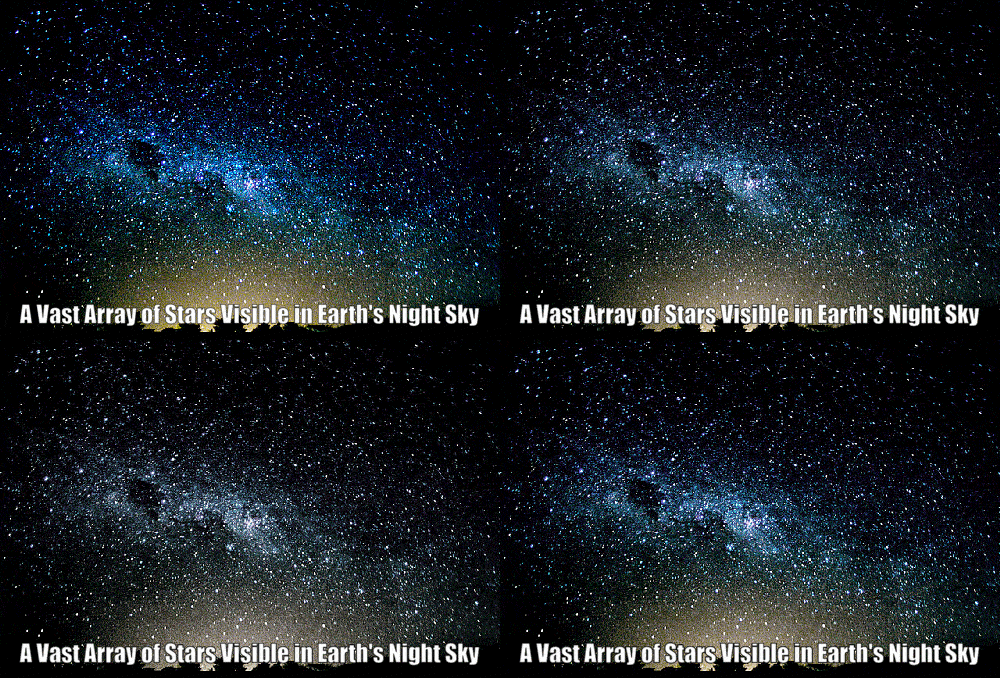
Definition: star
 A star is like any of a vast number of heavenly bodies that give out great heat and light
and can be visible from earth as points of light in the night sky. Our sun, Sol, is a star.
Fun Facts
1. The Sun is actually a medium-sized star. Even though our Sun looks like a giant glowing ball in the daytime sky, it's just an ordinary yellow dwarf star! It only looks so much bigger and brighter than other stars because it is much closer to Earth—about 93 million miles away compared to light-years away for all the rest.
2. Blue stars are hot, and red stars are cool. Fire on Earth is often red or orange, but in space, the hottest stars glow bright blue (reaching temperatures over 50,000°F)! Medium-temperature stars like our Sun glow yellow, and the coolest stars glow reddish-orange.
3. Stars don't actually twinkle. From Earth, stars seem to flicker and twinkle in the night sky. This happens because starlight has to pass through Earth's churning atmosphere, which bends and refracts the light beams before they reach your eyes! In outer space, stars shine with a perfectly steady glow.
4. Looking at stars is like looking back in time. Starlight travels through space at a fast speed, but distances in space are huge. Sunlight takes about 8 minutes to reach Earth, but light from the next closest star (Proxima Centauri) takes over 4 years to arrive—meaning you see that star as it looked 4 years ago!
5. Shooting stars aren't stars at all. When you spot a streak of light zooming across the night sky, you are actually watching a meteor! A meteor is a tiny pebble or piece of space dust burning up white-hot as it speeds into Earth's atmosphere.
6. There are more stars in the universe than grains of sand on Earth. Scientists estimate there are roughly 1022 stars in the observable universe (a 1 followed by 22 zeros!). That means there are far more stars shining in space than every single grain of sand on every beach and desert on Earth combined.
7. Some stars are a billion times bigger than our Sun. A red supergiant star named UY Scuti is so massive that if you placed it at the center of our solar system, its outer edge would swallow Mercury, Venus, Earth, Mars, and stretch all the way past Jupiter!