
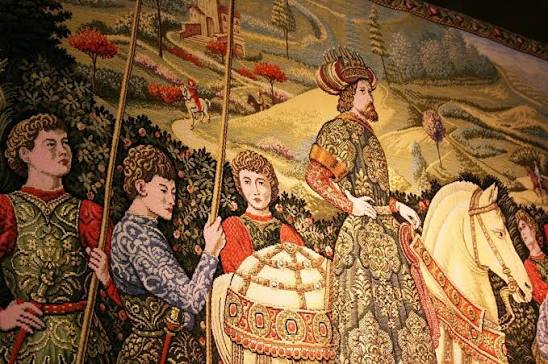
Definition: tapestry
 A tapestry is a piece of heavy cloth into which a design or picture has been woven
with colored threads. Tapestries are used as wall decorations.
Fun Facts
1. Giant Woven Pictures: A tapestry is a heavy piece of fabric with pictures, designs, or stories woven directly into it using colorful threads, rather than being painted or printed on top.
2. Portable Art Galleries: Long ago, castles and stone palaces had huge, freezing walls. Wealthy people used tapestries like giant, cozy blankets to cover the walls, which helped keep the rooms warm and colorful!
3. The Loom's Job: Tapestries are made on a machine called a loom. The vertical strings are called the warp, and the horizontal colored threads that create the picture are called the weft.
4. Hours and Hours of Work: Making a tapestry took an enormous amount of time and patience. A single large tapestry could take a team of skilled artists and weavers many months—or even years—to finish completely.
5. Hidden Threads: If you look at the back of a traditional tapestry, you will see loose threads and knots where the weaver changed colors. To keep the front looking neat, they carefully trimmed or hid all those extra strings on the backside.
6. Storybooks on Cloth: Before most people could read, tapestries were used to tell stories. They showed famous battles, fairy tales, kings and queens, or scenes from nature so anyone could understand the tale just by looking at the pictures.
7. The Bayeux Tapestry: One of the most famous tapestries in the world is the Bayeux Tapestry. It is an incredible 230 feet (70 meters) long—that's as long as a swimming pool—and tells the story of an invasion that happened nearly a thousand years ago!