
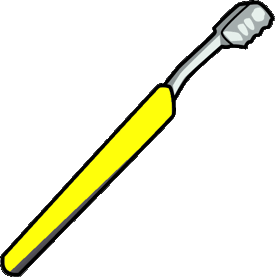
Definition: toothbrush
 A toothbrush is a brush with a short, narrow head and a long handle used to clean the teeth.
Fun Facts
1. Ancient toothbrushes were made from chewed twigs. Long before plastic brushes existed, people used chew sticks! Around 3500 BCE, ancient Babylonians and Egyptians frayed the ends of twigs from aromatic plants like the neem or miswak tree, using the exposed wooden fibers to scrub their teeth clean.
2. Early bristle toothbrushes used coarse pig hair. In 15th-century China, inventors created the first bristled toothbrush by harvesting stiff hair from the necks of cold-climate wild boars and attaching the coarse hairs to handles carved out of bone or bamboo handles!
3. DuPont invented modern nylon bristles in 1938. Coarse animal hair was replaced forever when scientists invented nylon—the first synthetic polymer plastic. In 1938, the first toothbrush with flexible, hygienic nylon bristles hit stores under the name "Dr. West's Miracle-Tuft"!
4. Electric toothbrushes vibrate up to 40,000 times per minute. Sonic electric toothbrushes use tiny internal electric motors and magnetic levitation drives to vibrate the brush head thousands of times per minute. The rapid vibrations push water and toothpaste between teeth to blast away plaque!
5. Blue bristles fade on purpose to tell you when to replace it. Many modern toothbrushes feature colored indicator bristles dyed with food-safe colorings. As you brush over weeks, the dye gradually washes out—when the color fades halfway down, it signals that the bristles are worn out and it's time for a fresh brush!
6. A prisoner invented the mass-produced toothbrush. In 1780, an English man named William Addis was sitting in a prison cell when he decided to improve upon rubbing rags and soot on his teeth. He saved a small bone from dinner, drilled tiny holes into it, pulled bristles through, and glued them in place—later founding a company that mass-produced toothbrushes worldwide!
7. Brushing for two minutes cleans about 100 trillion oral bacteria. Your mouth is home to billions of microscopic bacteria that feed on leftover sugars from meals to form a sticky film called plaque. Brushing twice a day with fluoride toothpaste disrupts this sticky bacterial shield to protect your tooth enamel!