
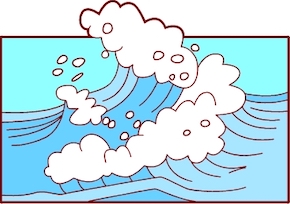
Definition: tsunami
 A tsunami is a very large, often destructive, sea wave that is caused by an
earthquake or explosion of a volcano under the ocean.
Fun Facts
1. Here are 9 fun and easy facts for kids about tsunamis: Giant Harbor Waves: The word tsunami (pronounced soo-NAH-mee) comes from Japanese words that mean "harbor wave." While people often call them tidal waves, they actually have nothing to do with ocean tides!
2. Born from Earthquakes: Most tsunamis are not created by regular wind storms. Instead, they are born deep underwater when giant tectonic plates suddenly slip, causing an earthquake, underwater volcanic eruption, or landslide that violently shoves the ocean water upward.
3. Secret Sprinters: Out in the deep, wide ocean, a tsunami wave travels at the speed of a jet airliner—often flying across the water at over 500 miles per hour (800 kilometers per hour)!
4. Growing Up Fast: As a tsunami races toward shallow water near the coastline, it slows down, but all that trapped water is forced upward. The wave piles up, turning into a towering wall of water that can crash onto the land.
5. Not Just One Wave: A tsunami is almost never just a single wave. It is actually a series of powerful waves (called a "wave train") that can keep crashing onto the shore hours apart, with the later waves sometimes being the biggest and most dangerous.
6. Super Strong Currents: A tsunami isn't just a crashing wave; it behaves like a massive, rushing river that floods far inland, carrying away cars, trees, and even houses with incredible strength.
7. Early Warning Systems: Scientists use high-tech sensors on the ocean floor and floating buoys to detect sudden underwater earthquakes. This gives them a way to send out early warnings so people living near coasts can run to higher ground safely.