
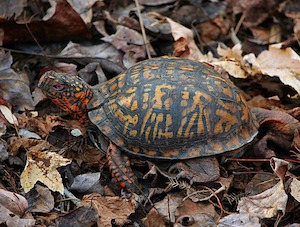
Definition: turtle
 A turtle is a reptile with a soft body covered by a hard shell that lives in water or on land. A turtle pulls its
head, legs, and tail into its shell for protection.
Fun Facts
1. A turtle's shell is permanently attached to its spine and ribcage. Unlike cartoon turtles who can slip out of their shells, a real turtle's shell is actually part of its skeleton! The top part of the shell (called the carapace) is made of fused ribs and backbone bones, meaning a turtle can never leave its shell behind.
2. Turtles existed long before the dinosaurs. Ancient fossil records show that the earliest ancestor turtles walked the Earth over 220 million years ago during the Triassic period! This makes turtles older than Tyrannosaurus rex, birds, crocodiles, and snakes.
3. Sea turtles navigate the ocean using Earth's magnetic field. Female sea turtles travel thousands of miles across open ocean currents and still return to the exact same beach where they were born to lay eggs! They do this using geomagnetic navigation, sensing tiny shifts in Earth's magnetic field like a built-in internal compass.
4. Leatherback sea turtles can dive over 4,000 feet deep. While most turtles prefer shallow waters, the giant Leatherback sea turtle can dive deeper into the dark ocean than most submarines! Their flexible, leathery shell collapses under immense water pressure, preventing it from cracking in the deep sea.
5. Some freshwater turtles can breathe through their rear end during winter. When pond turtles hibernate at the bottom of frozen lakes under ice, they enter a state of low metabolism called brumation. Since they can't come up for air, they absorb oxygen directly from the cold water through a blood-vessel-rich area near their tail (a process called cloacal respiration)!
6. Turtles have sharp beaks instead of teeth. No living species of turtle has any teeth! Instead, their jaws are lined with sharp, hard keratin ridges forming a beak. Carnivorous turtles have hook-shaped beaks to slice fish, while herbivorous turtles have serrated beaks to cut through sea grasses.
7. Galapagos giant tortoises can live for over 100 years. Giant tortoises are among the longest-living animals on the planet. Thanks to a slow metabolism and stress-resistant cells, these massive land tortoises frequently live past 100 years in the wild, with the oldest known tortoise reaching an incredible 190 years old!