
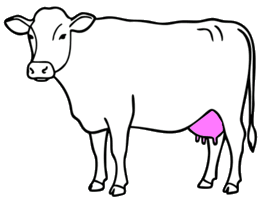
Definition: udder
 An udder is a large mammary organ with two or more glands, each
with its own nipple, as in a cow or a goat.
Fun Facts
1. An udder is a specialized organ made of four separate quarters. A cow’s udder might look like one big pouch, but it is actually divided into four completely distinct compartments, each with its own teat and milk-producing glands! Milk cannot flow between the four quarters inside the udder.
2. Milk is made inside microscopic grape-like clusters called alveoli. Inside the udder, specialized cells form microscopic balloon-like structures called alveoli. Blood carrying nutrients from the cow's digested food flows past these alveoli, where the cells transform water, proteins, fats, and sugars into fresh milk!
3. It takes 500 gallons of blood pumping through an udder to make just one gallon of milk. Producing milk requires massive amounts of energy and nutrients! A dairy cow’s heart pumps around 400 to 500 gallons of oxygen- and nutrient-rich blood through the udder's complex capillary system for every single gallon of milk produced.
4. A natural hormone triggers milk release in seconds. When a calf begins to nurse or a milking machine starts, it triggers the cow's brain to release a hormone called oxytocin into the bloodstream. In less than a minute, oxytocin causes tiny muscles around the alveoli to squeeze, releasing stored milk down into the teats!
5. Strong elastic ligaments hold heavy udders to the cow's body. Full udders can weigh over 100 pounds when filled with milk! To support this heavy weight, cows have strong internal bands of tissue called suspensory ligaments that act like built-in ropes, anchoring the udder securely to the abdominal wall and pelvis.
6. Cow udders store up to 8 gallons of milk at a time. High-producing modern dairy cows can store massive amounts of liquid inside the milk cisterns of their udders! Because cows produce milk continuously, farmers usually milk cows twice or three times a day to keep the cow comfortable and healthy.
7. Robotic milking machines use lasers to locate teats automatically. On modern high-tech dairy farms, cows choose when to get milked! Automatic robotic milking systems use 3D optical cameras and precise laser beams to scan the cow's underside, locate the four individual teats on the udder, and gently attach suction cups without any human help.