
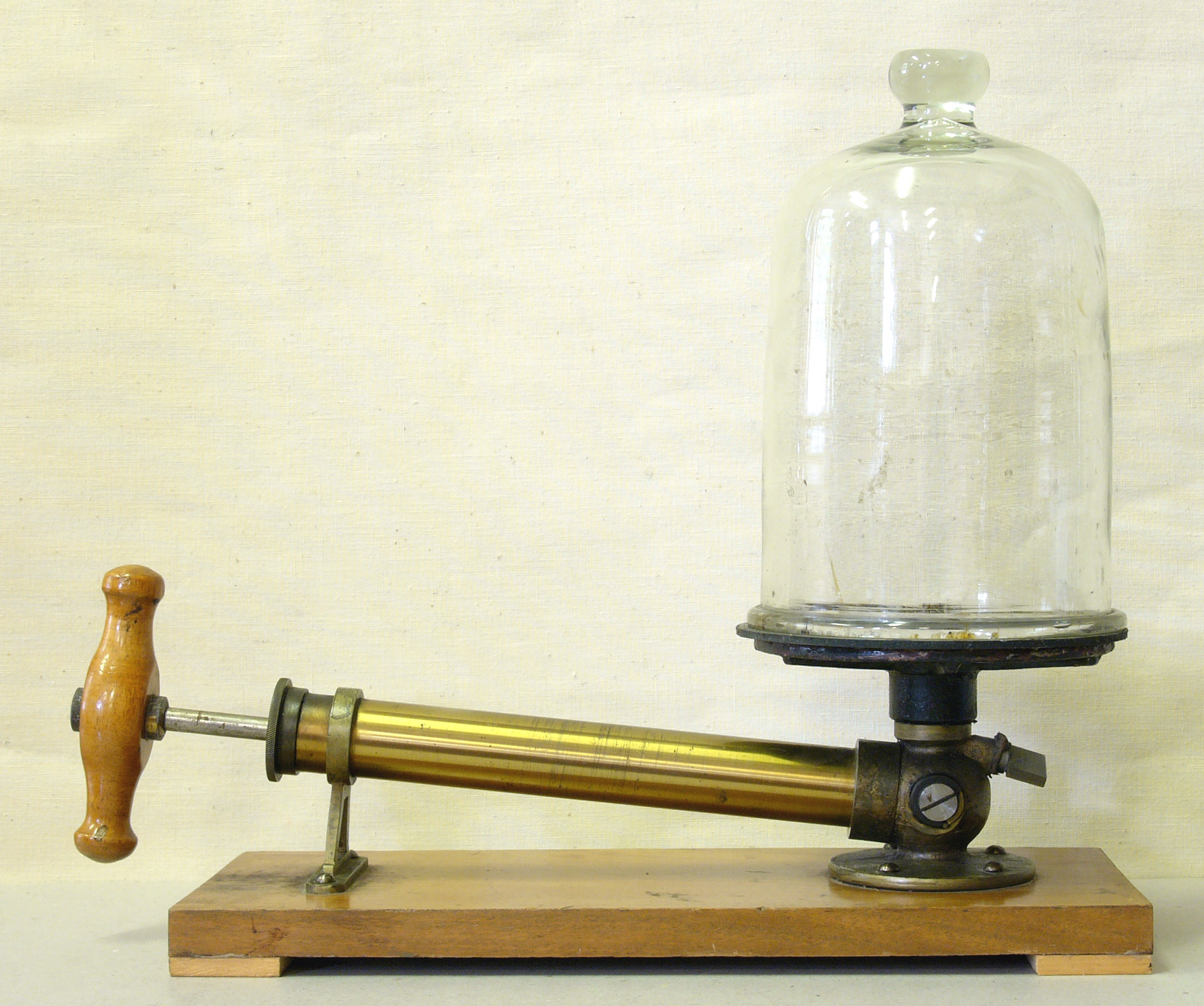
Definition: vacuum
 A vacuum is a space or container from which most of the air has been removed. Outer
space and the inside of a light bulb are examples of vacuums. A "vaccum" could also be the carpet cleaning machine
used to extract the dirt from the carpets in your house.
Fun Facts
1. The word "vacuum" comes from a Latin word meaning "empty space." The name originates from the Latin word vacuus, which literally means "empty" or "free." In physics, a true vacuum describes a space completely empty of matter and air molecules!
2. Vacuums don't actually "suck"—higher air pressure pushes dirt inside. A vacuum cleaner motor spins a fan that blows air out, dropping the internal air pressure. Higher external atmospheric pressure outside the vacuum then rushes in to equalize the pressure, sweeping dust and crumbs along with it!
3. The very first motorized vacuum was so huge it was pulled by horses. Invented in 1901 by British engineer Hubert Cecil Booth, the Puffing Billy was a massive, petrol-powered vacuum mounted on a horse-drawn wagon. Giant hoses were fed through house windows to clean carpets from the street!
4.HEPA filters trap microscopic particles using dense glass fibers. High-Efficiency Particulate Air (HEPA) filters use a chaotic web of microscopic fiberglass threads. As air passes through, tiny particles like dust mites and pollen get trapped through diffusion, interception, and impaction, catching 99.97% of particles down to 0.3 microns!
5. Outer space is the ultimate natural vacuum. Deep space between stars is nearly a perfect vacuum! Because there is almost no gravity to hold gas molecules together, a volume of space the size of a cardboard box might contain only a few solitary hydrogen atoms.
6. Robot vacuums map room layouts using light-based LiDAR sensors. Autonomous robotic vacuums bounce invisible spinning laser beams (LiDAR) off walls and furniture thousands of times per second. By measuring how long the light signals take to bounce back, the robot calculates exact distances to build a 2D floor map!
7. Lightbulbs contain vacuum seals so filaments don't instantly burn up. Traditional incandescent lightbulbs have their glass globes evacuated of oxygen to create a vacuum (or filled with inert gas). Without oxygen molecules inside, the superheated tungsten filament can glow brightly at thousands of degrees without catching fire!