
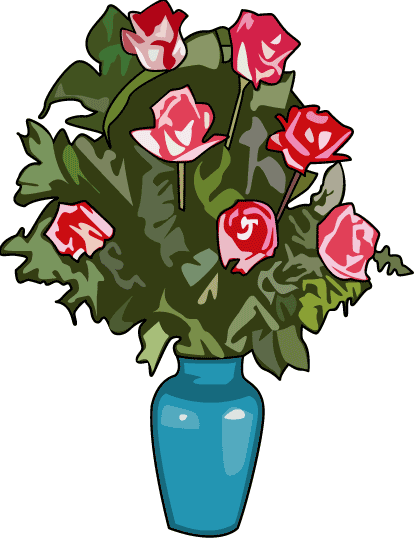
Definition: vase
 A vase is an open container of glass or pottery that is usually taller than it is wide. A vase is
used as a decoration or to hold cut flowers.
Fun Facts
1. The word "vase" comes from a Latin word for a small vessel. The term originates from the Latin word vasculum, which is a diminutive of vas (meaning "vessel" or "container"). It literally describes a small hollow receptacle crafted to hold liquids or flowers!
2. Ancient pottery vases were spun on water-powered flywheels. Early ceramicists shaped vases using a potter's wheel. By kicking a heavy stone flywheel, momentum kept the wheel spinning at a steady angular velocity, letting potters use centripetal force and hand pressure to pull raw clay into symmetrical hollow shapes.
3. Porcelain vases require extreme temperatures over 2,200°F to vitrify. Fine china and porcelain vases are made from a white clay mineral called kaolin. When fired in a kiln at temperatures exceeding 2,200°F (1,200°C), kaolin undergoes vitrification, melting silica particles into a non-porous, glass-like waterproof crystal structure.
4. Ming Dynasty blue-and-white vases used cobalt imported from Persia. Famous Chinese blue-and-white porcelain vases from the Ming Dynasty got their iconic blue color from cobalt oxide. Chinese artisans painted cobalt pigment directly onto raw clay before applying a clear glaze and firing it in high-heat kilns!
5. Narrow vase necks slow down water evaporation. A vase isn't shaped with a narrow neck just for looks! The constricted opening reduces the surface area of water exposed to air, slowing down the rate of evaporation and keeping cut flower stems submerged in fresh water longer.
6. Glass vases are blown using pneumatic pressure from human lungs. Artisans make hand-blown glass vases by gathering molten silica glass at the end of a long metal blowpipe. By blowing air down the pipe, pneumatic pressure expands the hot, malleable glass outward like a balloon inside iron molds!
7. Hydrostatic pressure requires vase bases to be thick and heavy. Water exerts downward and outward hydrostatic pressure against vase walls. To prevent tall, water-filled vases from tipping over under the top-heavy weight of long flower stems, ceramicists make the base significantly thicker to lower its center of gravity.