
Definition: vine
 A vine is a plant having a long, thin, woody stem that climbs up a support or
creeps along the ground.
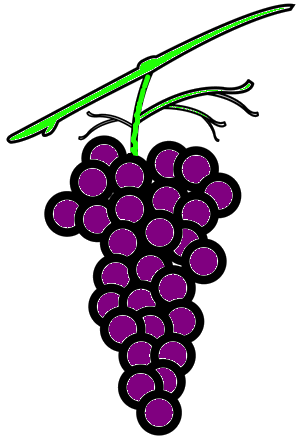
Grapes (shown left) grow on vines.
Fun Facts
1. The word "vine" comes from an ancient Latin word for a grapevine. The word originates from the Latin term vinea, which means "vineyard" or "grapevine" (derived from vinum, meaning "wine"). Historically, it referred specifically to grape-bearing plants before expanding to describe any climbing or trailing plant!
2. Vines climb by sensing physical touch through thigmotropism. Vines don't have eyes, but they can "feel" solid objects! When a growing vine tip touches a branch or trellis, cells on the touching side slow down while cells on the opposite side expand rapidly. This plant growth response, called thigmotropism, causes the vine to coil tightly around the support!
3. Specialized wiry tendrils coil like springs to absorb wind gusts. Many climbing vines (like pea plants and passionflowers) grow thin, thread-like organs called tendrils. Once a tendril grips a object, it coils itself into a spring-like helical shape that acts like a natural shock absorber, keeping the vine from snapping when strong winds blow!
4. Tropical woody vines called lianas make up over half the canopy in rainforests. Woody vines that grow in tropical rainforests are called lianas. Anchored deep in the forest floor soil, lianas wind their way up giant tree trunks to reach the sunny canopy, acting as natural high-wire bridges that monkeys, sloths, and ants use to walk between trees!
5. Boston Ivy sticks to flat brick walls using microscopic adhesive suction pads. Unlike vines that coil around sticks, Boston Ivy (Parthenocissus tricuspidata) grows specialized adhesive discs at the tips of its tendrils. These discs secrete a natural chemical bio-adhesive that cements the plant to smooth rock or brick walls with incredible grip!
6. The world's longest vine can grow to over 600 feet long. The rattan palm (Calamus species) is a spiky climbing vine native to tropical regions of Asia and Africa. Instead of growing a thick, rigid trunk, its flexible stem climbs up neighboring trees to reach lengths of over 600 feet (180 meters), making it one of the longest land plants on Earth!
7. Kudzu vines can grow at an astonishing rate of one foot per day. Native to East Asia, the kudzu vine (Pueraria montana) was introduced to North America in the late 1800s. Under warm summer conditions, kudzu performs rapid photosynthesis, allowing individual vine shoots to grow up to 12 inches (30 cm) per day, earned it the nickname "the vine that ate the South"!