
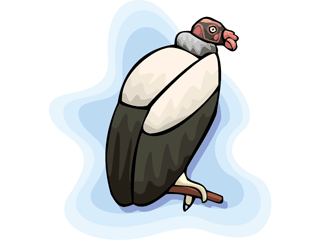
Definition: vulture
 A vulture is a large bird that usually has dark feathers and a bald head and
neck. There are many kinds of vultures. These birds are related to hawks and feed on dead animals.
Fun Facts
1. The word "vulture" comes from an ancient Latin word meaning "to tear." The word originates from the Latin term vultur, which stems from vellere (meaning "to tear, pluck, or snatch"). It describes how these birds tear meat while feeding!
2. Vulture stomachs contain super-strong acid that destroys deadly bacteria. Vultures have extremely acidic stomach juices with a pH close to zero (nearly as acidic as battery acid!). This gastric acidity easily kills dangerous pathogens like anthrax, cholera, and botulism toxins, letting vultures safely eat decaying meat that would make other animals sick.
3. Vultures stay clean by having bald heads and necks. Unlike most birds, most vultures have featherless, bald heads. This morphological adaptation prevents rotten meat, blood, and bacteria from sticking to their feathers while feeding inside carcasses, keeping them clean and disease-free!
4. They soar for hours without flapping using rising thermal air currents. Vultures are masters of energy conservation. Instead of constantly flapping their wings, they search for thermals—columns of warm air that rise from the heated ground. By riding these invisible air currents, vultures can glide for hours while expending almost no physical energy!
5. Turkey vultures find food using an extraordinarily powerful sense of smell. While most birds rely almost entirely on vision, North American Turkey Vultures have enlarged olfactory bulbs in their brains. They can detect the microscopic scent of sulfur compounds (like ethyl mercaptan) floating in the air from miles away under dense forest canopies!
6. Bearded vultures survive on a unique diet made of 85% solid bone. The Bearded Vulture (or Lammergeier) is the only known vertebrate whose diet consists almost entirely of bones! They swallow small bones whole or drop giant bones onto rocks from high in the air to shatter them into digestible pieces, extracting rich marrow inside.
7. Vultures use defensive vomiting as a high-powered defense mechanism. If a predator threatens a vulture while it is feeding, the bird can instantly regurgitate its stomach contents! This defensive vomiting lightens the bird's body mass so it can take off rapidly into the air while grossing out and scaring away the predator.