
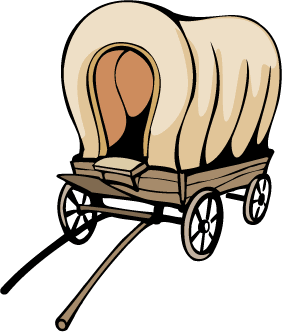
Definition: wagon
 A wagon is a vehicle with four wheels that is used to carry heavy loads. Wagons are
usually drawn by horses, tractors, or trucks.
Fun Facts
1. The word "wagon" comes from an ancient Germanic word for a traveling vehicle. The word originates from the Dutch term wagen, which comes from Proto-Germanic wagnaz (meaning "chariot" or "vehicle"). It shares an etymological root with the English word way!
2. Ackermann steering geometry keeps wagon wheels turning without skidding. Unlike cars, which turn wheels individually, traditional wagons turn their entire front axle on a central kingpin pivot. This mechanical system uses Ackermann steering principles so the inside and outside wheels track along smooth, concentric curves during sharp turns!
3. Conestoga wagons were sloped like wooden boats to keep cargo centered. Built in Pennsylvania during the 1700s, Conestoga wagons featured curved, boat-shaped floorbeds. This clever gravitational design forced heavy barrels and boxes to slide back toward the center of the wagon rather than spilling out when driving up or down steep hills!
4. Covered wagon canvas bonnets were waterproofed using natural oils. The fabric covers on pioneer "prairie schooners" were made of heavy cotton canvas called osnaburg. Pioneer families coated the fabric with linseed oil, wax, or animal fat, creating a hydrophobic barrier that repelled rainwater to keep supplies dry!
5. Radio Flyer wagons were named after two groundbreaking 1920s inventions. Italian immigrant Antonio Pasin started making red steel toy wagons in Chicago in 1917. In 1930, he named his famous company Radio Flyer by combining two exciting technological wonders of the era: Marconi's wireless radio and pioneer flight aviation (flyer)!
6. Chuck wagons were the world's very first mobile food trucks. Invented in 1866 by Texas rancher Charles Goodnight for long cattle drives, the chuck wagon was a modified army surplus wagon fitted with a rear "kitchen box." It featured drawers, fold-out worktables, and storage for spices, flour, and coffee!
7. Station wagons got their name because they transported luggage to train stations. Long before modern SUVs, automobile companies built station wagons with extra seating and large wooden trunks. They were built specifically to haul passengers and their heavy luggage back and forth from rural train stations to hotels!