
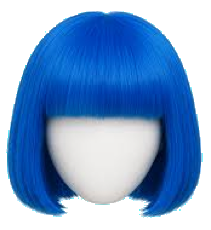
Definition: wig
 A wig is a head covering made of natural or artificial hair, worn to cover one's own hair.
Fun Facts
1. The word "wig" is a shortened form of the old word "periwig." The word originates as an abbreviation of periwig, which comes from the Middle French word perruque (meaning "head of hair"). Over time, 17th-century speakers dropped the first two syllables to create the shorter, modern word!
2. Ancient Egyptians wore beeswax-coated wigs to protect their heads from the sun. Around 2700 BC, wealthy Egyptians shaved their heads to stay cool and prevent head lice. They wore elaborate wigs made of human hair or sheep's wool coated in beeswax to shield their bare skin from harsh desert ultraviolet rays!
3. King Louis XIV of France made giant wigs popular across Europe to hide hair loss. When King Louis XIV started losing his hair in his teens, he hired 48 court wigmakers to craft massive, flowing hairpieces. This trend turned periwigs into the ultimate status symbol for European royalty and nobility for over a century!
4. 18th-century powdered wigs were dusted with starch scented with lavender and orange blossom. People in the 1700s dusted their wigs with white powder made from ground wheat starch or rice flour. Scented with lavender and nutmeg, the powder absorbed natural scalp oils and masked unpleasant odors in an era before modern shampoo!
5. The phrase "bigwig" comes from rich aristocracy who wore the largest hairpieces. In the 1700s, the cost of a wig depended on its size and the amount of human hair used. Extremely wealthy lords and politicians wore massive, towering hairpieces, leading ordinary citizens to call powerful leaders "bigwigs"!
6. British judges and barristers still wear traditional horsehair wigs in court. In the UK and several Commonwealth nations, judges and lawyers wear small white wigs made from woven horsehair. Introduced in the 1600s, this courtroom dress tradition is kept today to symbolize the legal system's formality and impartiality!
7. Synthetic wigs are engineered using heat-resistant modacrylic polymer fibers. Synthetic hair isn't made of plastic strings! It is crafted from specialized modacrylic polymers (long chains of synthetic molecules) that are melted, extruded into microscopic threads, and heat-set with permanent waves or curls that won't fall out in rain!