
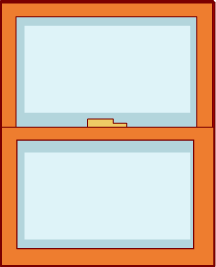
Definition: window
 A window is an opening in a wall or vehicle that lets in air and light and provides a view out.
Fun Facts
1. The word "window" comes from an ancient Norse word meaning "wind eye." The word originates from the Old Norse term vindauga, which combines vindr (meaning "wind") and auga (meaning "eye"). Before glass existed, windows were literally small unglazed openings in walls designed to let light in while letting smoke out!
2. Ancient Romans were the first to use clear glass panes for windows. Around 100 AD in Roman Alexandria, craftsmen discovered how to cast molten silica glass into thin flat sheets. Though early Roman window glass was thick, cloudy, and filled with trapped air bubbles, it allowed light into baths and villas while blocking rain!
3. Double-pane windows trap noble gas layers to slow thermal conduction. Modern energy-efficient windows use double glazing (two parallel glass panes separated by an airtight gap). Manufacturers fill this sealed space with dense noble gases like argon or krypton, which conduct heat much slower than air, keeping indoor rooms warm in winter and cool in summer!
4. Tempered safety glass shatters into tiny harmless cubes instead of sharp shards. To make safety windows for cars and doors, standard glass undergoes a thermal tempering process. The glass is heated to over 1,100∘F (600∘C) and rapidly cooled with high-pressure air blasts. This creates internal surface compression, causing the glass to crumble into small, dull granules if broken!
5. Smart electrochromic windows change tint with the press of an electric button. Modern smart glass uses electrochromism! Trapped between glass layers is a micro-thin coating of tungsten oxide. When a tiny electric voltage passes through the conductive layer, lithium ions shift positions within the chemical lattice, dynamically switching the window from crystal clear to dark blue!
6. Laminated glass uses a sticky plastic sandwich to stop flying objects. Invented by French chemist Édouard Bénédictus in 1903 after he dropped a glass flask coated with dried liquid cellulose, laminated glass bonds two outer glass sheets around a middle layer of polyvinyl butyral (PVB) plastic. If struck, the glass cracks, but the plastic interlayer holds the broken pieces firmly together!
7. Stained glass windows get their bright metallic colors from actual gold and copper oxides. Medieval artisans created vivid colors in cathedral stained glass by adding raw metallic salts directly into molten glass batches! Adding copper oxide produces deep blues and greens, cobalt creates intense royal blue, and microscopic particles of pure gold oxide generate brilliant ruby red hues!