
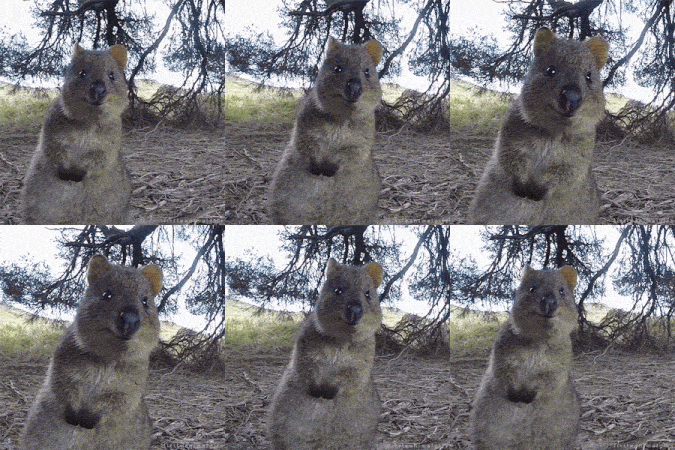
Definition: wombat
 A wombat is a cute, stocky Australian animal that is a great digger! Wombats haave
strong legs and sharp claws to build burrows in the ground. Wombats are marsupials, which means they carry their
babies in a pouch.
Fun Facts
1. The word "wombat" comes from an Indigenous Australian language. The name originates from wambad (or wombat), a word from the Dharug language spoken by the Indigenous Australian people of the Sydney area. English settlers adapted the Indigenous word in the late 1700s!
2. Wombats produce cube-shaped poop to mark territory without it rolling away. Wombats are the only known animals that produce cubic feces! Rhythmic intestinal contractions squeeze the drying digestive material against varying elasticity zones in their intestinal walls, shaping roughly 80 to 100 flat-sided cubes every night so they stay stacked on elevated rocks as territorial markers!
3. A female wombat's pouch faces backward to keep dirt out while digging. Unlike kangaroos, whose pouches open upward, marsupial wombats have a rear-facing pouch. This evolutionary adaptation prevents flying dirt, rocks, and debris from entering the pouch and covering nursing "joeys" while the mother excavates underground tunnels!
4. Wombats use a thick, armored cartilage plate on their backside for defense. A wombat's rear end is covered in an extremely tough shield made of thick skin, cartilage, and bone. When threatened by predators like dingoes, the wombat dives headfirst into its burrow and blocks the entrance with its dermal shield, crushing the attacker's head against the tunnel roof if pushed!
5. Wombats are muscular diggers equipped with rodent-like open-rooted teeth. A wombat's incisors grow continuously throughout its life (open-rooted teeth). Because their diet consists of tough native grasses, bark, and fibrous roots, constant gnawing grinds down the enamel, preventing their teeth from growing too long!
6. Wombat burrows form massive subterranean networks that shelter other species. Using their powerful shoulders and spade-like claws, wombats construct complex underground burrow systems reaching up to 100 feet (30 meters) long! During Australian bushfires, these cool, humid underground chambers serve as life-saving refuges for lizards, wallabies, and birds.
7. A group of wombats is called a "wisdom." While adult wombats are mostly solitary creatures that live in individual burrow territories, a collective group of wombats is officially known in linguistics as a wisdom (or a mob)!