
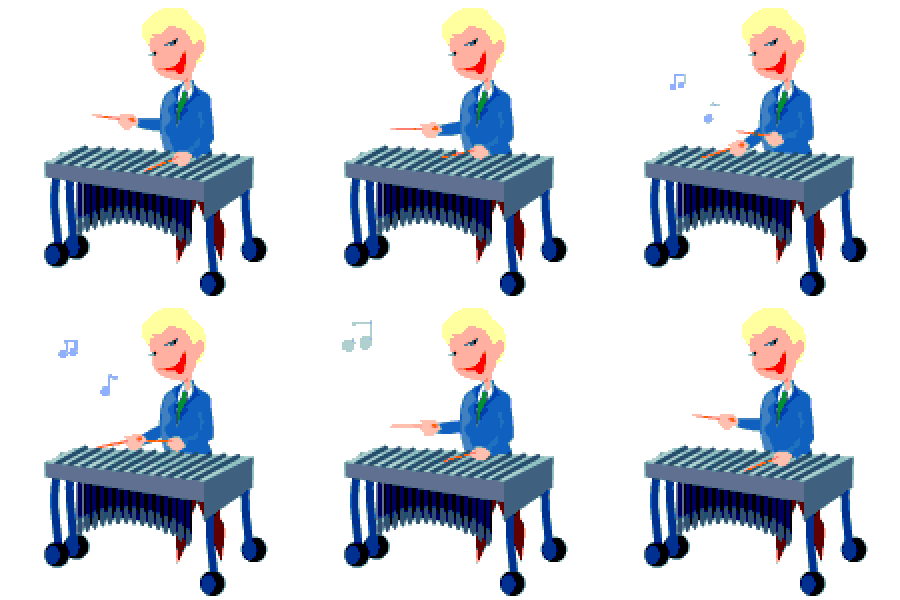
Definition: xylophone
 A xylophone is a a percussion instrument composed of a series of metal or wooden bars. It
is played by hitting the bars with small wooden mallets.
Fun Facts
1. The word "xylophone" combines two Greek words for wood and sound. The name originates from the Ancient Greek terms xylon (meaning "wood" or "timber") and phōnē (meaning "voice, sound, or utterance"). It literally translates to "the sound or voice of wood"!
2. Xylophones belong to a family of instruments called idiophones. In organology (the science of musical instruments), a xylophone is an idiophone. This means the instrument creates sound primarily through the vibration of its own solid body when struck, without needing stretched strings or membranes!
3. Pitch is determined by the length and physical mass of each wooden bar. When hit with a mallet, a wooden bar vibrates in a standing wave. Shorter, thinner bars vibrate at higher frequencies (producing high pitches), while longer, heavier bars vibrate slower at lower frequencies (producing deep, low pitches)!
4. Concert xylophones are crafted from dense rosewood or padauk timber. Professional orchestra xylophones use dense tropical hardwoods like Honduran rosewood (Dalbergia tucurensis) or African padauk. The high physical density and straight grain structure of these woods provide bright, crisp acoustic resonance!
5. The metal colorful "xylophones" for young kids are actually glockenspiels. Most colorful toys labeled as "baby xylophones" are technically glockenspiels or metallophones! True xylophones must have wooden (or synthetic wood polymer) bars, whereas glockenspiels use metal bars to produce bright ringing tones.
6. Hard mallets produce sharp harmonic overtones, while soft mallets absorb them. The material of the mallet head changes the instrument's timbre! Striking a bar with hard plastic mallets creates a sharp, piercing attack filled with high-frequency overtones, while rubber or yarn mallets soften the impact for a warm sound.
7. Saint-Saëns used the xylophone in 1874 to simulate rattling skeleton bones. French composer Camille Saint-Saëns was among the first to introduce the xylophone to western orchestral music in Danse Macabre. He used the dry, clicking acoustic properties of the wooden bars to represent the clinking bones of skeletons dancing at midnight!