
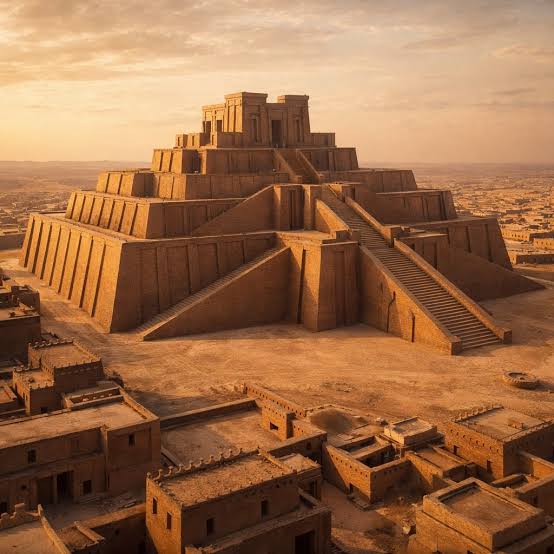
Definition: ziggurat
 A ziggurat is a terraced, pyramidal tower of the ancient Sumerians, Assyrians, and Babylonians.
Fun Facts
1. Step-Pyramid Towers: Ziggurats were massive, towering structures built by ancient civilizations in Mesopotamia (modern-day Iraq and Syria). Instead of having smooth sides like the pyramids in Egypt, ziggurats were built with giant flat steps or terraces, looking a bit like giant wedding cakes!
2. Mountain Homes for the Gods: The people who built ziggurats believed their gods lived high up in the mountains. Since the land in Mesopotamia was completely flat, they built these towering brick mountains so their gods would have a high, sacred home right in the middle of the city.
3. Built Out of Mud: Because stone was very hard to find in the flat river plains, ancient builders made ziggurats out of millions of sun-baked mud bricks. To keep them strong and waterproof, they often used sticky asphalt or bitumen as mortar.
4. The Top Temple: Only the most important people—the high priests and priestesses—were allowed to climb all the way to the top. There sat a small, beautiful temple where they left food, gifts, and prayers for the gods.
5. The Heart of the City: Ziggurats weren't hidden away; they were the star attraction of ancient cities like Ur and Babylon! Everything happened around them—busy markets, royal palaces, and bustling neighborhoods surrounded the base.
6. Ancient Skyscrapers: These were some of the tallest buildings in the ancient world! Some ziggurats towered as high as a modern 7-story building, dominating the flat landscape for miles around.
7. Still Standing Today: Even though they were made of mud bricks and are thousands of years old, some ziggurats (like the Great Ziggurat of Ur) are still standing today in the desert sand, reminding us of the amazing engineers of the ancient world!